About me
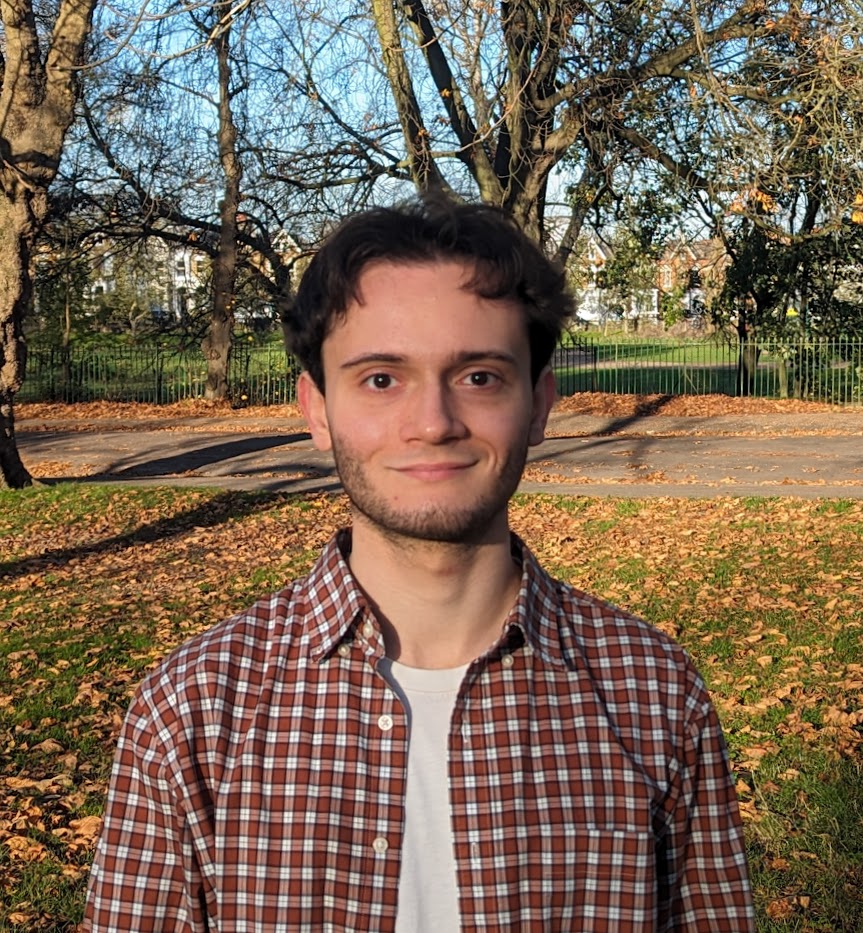
Hi! I’m a PhD student in demography and economic history at the London School of Economics. In October 2026, I will join Magdalen College, Oxford as a postdoctoral researcher and as the Assistant Director of the Calleva Research Centre, Magdalen’s interdisciplinary centre of research excellence.
I am also an affiliate of the Leverhulme Centre for Demographic Science at the University of Oxford, and throughout 2024, I was a Research Fellow (Forsker III) at Oslo Metropolitan University’s Centre for Research on Pandemics & Society (PANSOC).
Most of my work focuses on the societal impacts of social and demographic crises. I have a particular focus on better understanding the 1918 influenza pandemic, but I have also worked on the trends in high-income national fertility after the 2009 global financial crisis and on the geography of mental health around the 2016 Brexit referendum in the UK. One of my bigger collaborative projects uses census microdata data from 1880s through the 2010s to test how polygyny affects marriage markets and might impact social conflict.
At LSE, I am based in the Department of Economic History. Further afield, I am involved in the community of demographers spread across the university and beyond, serving on the management board of the Association for Young Historical Demographers and the EU-funded GreatLeap project.
Before landing at LSE, I completed a MPhil in Demography at Nuffield College, University of Oxford. During my MPhil, I was also affiliated with Oxford’s Department of Sociology. Before that, I completed a BA in Human Sciences at the University of Oxford, an interdisciplinary programme of biology and social science.
Latest publications
- Gaddy, H. (2026). We are our memory: A flexible framework for quantifying the demographic imprints of the past. Population and Development Review, 52(2): 265–298. doi:10.1111/padr.70074
- Gaddy, H., Sear, R., & Fortunato, L. (2025). High rates of polygyny do not lock large proportions of men out of the marriage market. PNAS, 122(40): e2508091122. doi:10.1073/pnas.2508091122
Current projects
If you want to read what I am working on at the moment, here are preprints of a few of my current projects!
- “The missing Pacific influenza epidemics, 1918–21” (with Svenn-Erik Mamelund and Michael G. Baker), doi:10.31235/osf.io/4mb5a_v2
- “Death registration incompleteness and demographic structure obscure the inequality of Alaska Natives in the 1918 influenza pandemic”, doi:10.31235/osf.io/yu7bt_v1